July 03, 2026

Key takeaways
- Softer US jobs data can benefit markets when inflation is the primary risk. Slower hiring can ease inflation concerns and reduce pressure on interest rates.
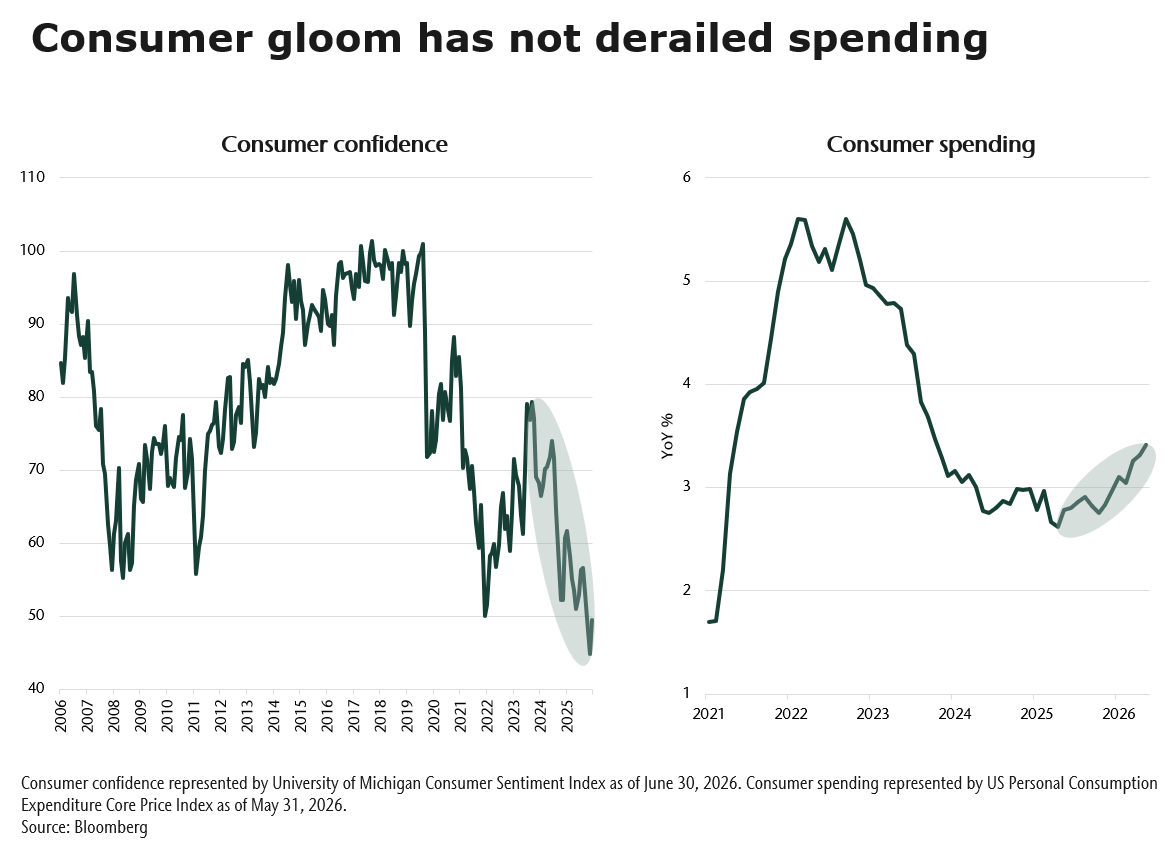
- Weak consumer confidence can also ease pressure on rates if spending continues to hold up. A more cautious consumer suggests demand is cooling rather than overheating, while lower gasoline prices may provide enough relief to keep the economy moving forward.
- Earnings remain the main driver of equity market returns. Profits are growing at an unusually strong pace helping offset some signs that economic growth may be slowing.
The economy has been stronger than many expected this year, helped by artificial intelligence (AI)-related spending, government stimulus, and resilient corporate profits. That strength has kept central banks focused on inflation, with less urgency to support the labour market.
This week’s softer United States (US) employment report suggests the labour market may be cooling from a position of strength. One report does not make a trend, but it serves to marginally ease inflation concerns and reduce the risk that central banks need to raise interest rates. This is good for markets, as easing inflation pressures reduce the likelihood of higher interest rates and help support valuations.
Weaker consumer confidence yet strong spending
Weak confidence can also be seen as bad news. Households remain frustrated by higher prices and elevated borrowing costs. However, consumer sentiment has not yet translated into weaker spending. That distinction matters, because confidence surveys tell us how consumers feel, while spending data reveals what they are actually doing.
An important nuance is that spending strength is increasingly uneven. Higher-income households and asset owners are carrying a larger share of overall spending, supported by strong financial markets and rising wealth. As a result, consumer spending remains a meaningful contributor to earnings growth, helping support equity markets.
Company earnings are doing the heavy lifting
Markets can look through softer economic data points when earnings are strong. This is what makes the current backdrop different from other periods of weaker economic data. Corporate profits are not simply holding up, they are growing at an unusually strong pace, supported by resilient nominal growth, fiscal spending, and AI-related capital investment. Companies have also continued to beat market expectations.
This is the link back to the broader theme. Slower job growth and weaker consumer confidence can be positive for markets if they signal easing inflation pressures. This reduces the risk that central banks will need to raise interest rates. This narrative is supporting valuations and lifting stocks higher.
Bottom line
Bad news is only good news for markets when it cools inflation risk without damaging growth. That is the balance investors are focused on today. Softer jobs data and weaker consumer confidence may reduce pressure on interest rates, while spending and earnings remain resilient. This remains a positive backdrop for markets.