May 15, 2026
Key takeaways
- Growth remains resilient, supported by AI investment. Markets continue to look through Middle East risks because investors believe the economic impact will be temporary.
- Markets are willing to tolerate higher inflation as long as earnings and economic growth remain strong. This week’s hotter-than-expected US inflation data did little to change the view that inflation pressures should ease over time.
- The real risk is inflation becoming persistent enough to weaken consumer spending. So far, higher-income consumers continue to support the economy despite higher prices, helped by strong asset markets and accumulated wealth.
Despite rising geopolitical tensions and another upside surprise in US inflation data, equity markets continued to move higher this week. Markets remain focused on growth and earnings, which continue to be supported by the Artificial Intelligence (AI) investment cycle. While inflation has moved higher, markets continue to view the recent rise in prices as temporary rather than the start of a new inflation regime.
The global economy continues to show surprising resilience. Growth has held up, corporate earnings remain strong, and continued investment tied to AI is supporting economic activity through large-scale buildouts of data centres, power infrastructure and digital networks.
Earnings growth has been particularly robust from a historical perspective, continuing to anchor investor confidence.
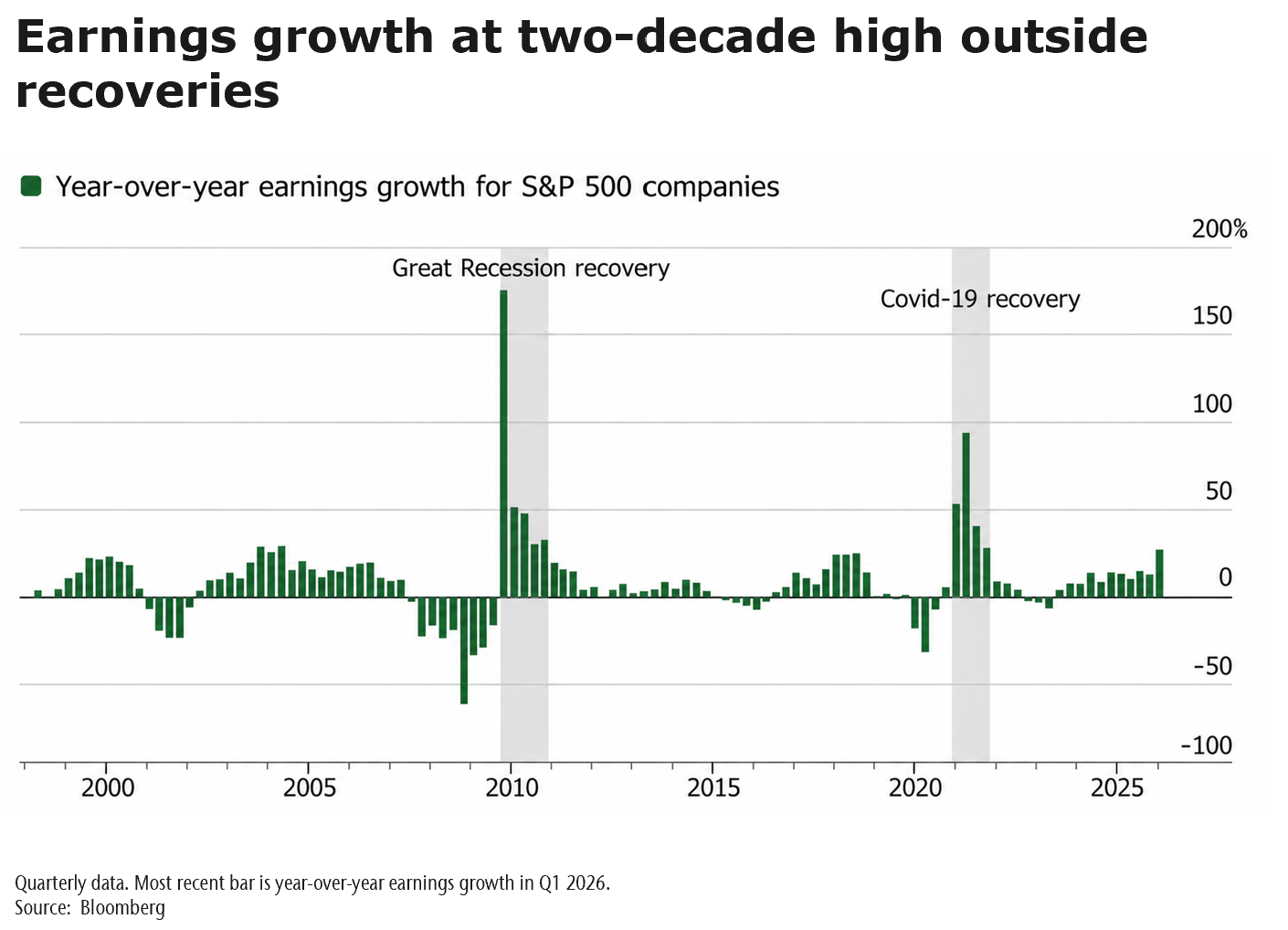
Inflation matters less when company earnings are strong
For now, investors appear relatively complacent about the economic risks from the Middle East conflict. While higher energy prices have contributed to rising inflation pressures, markets are operating under the assumption that the conflict will not lead to a prolonged disruption to global growth or supply chains.
This week’s US inflation report reinforced the idea that inflation remains sticky, particularly in areas tied to energy, transportation and imported goods. Under normal circumstances, hotter inflation data would likely pressure both stocks and bonds. However, markets continue to look through inflation because earnings remain strong and investors believe geopolitical tensions are unlikely to create a lasting shock to global growth.
The real risk is a hit to consumption
Rising inflation has not been enough to derail markets. However, if higher prices begin to meaningfully slow consumer spending, this could eventually weaken the economy. So far, this has not happened in a significant way.
The economy increasingly resembles a “K-shaped” recovery, where higher-income households continue to spend while lower-income consumers face greater pressure from higher living costs. Wealthier consumers have benefited from rising home values, strong equity markets and accumulated savings, making them less sensitive to higher prices. For many households, a more expensive summer trip or higher restaurant bill is not enough to materially alter spending behaviour.
That resilience in higher-income spending is helping support broader economic growth despite weaker consumer confidence surveys and rising financial pressure on lower-income households.
AI is the other big risk
The other major risk is that expectations around AI have become so high that there is little room for disappointment. Markets are assuming that today’s massive spending on AI infrastructure will eventually translate into meaningful productivity gains, stronger earnings growth and new revenue streams across the economy. If monetization progresses more slowly than expected, or companies begin questioning returns on enormous AI spending plans, investor enthusiasm could fade quickly.
Bottom line
For now, markets remain focused on resilient growth, strong corporate earnings and the long-term investment opportunity tied to AI. While inflation pressures have increased, investors continue to believe they will prove temporary rather than enough to derail the economy or market momentum.
The key risk is not simply higher inflation, but whether inflation becomes persistent enough to weaken consumer spending, keep interest rates elevated and eventually pressure growth. Until that changes, markets are likely to continue rewarding companies and sectors tied to resilient earnings, AI investment and long-term structural growth themes.