April 17, 2026

Key takeaways
- This rally is being driven by falling inflation expectations—not a resolution of the conflict. As oil prices stabilize, bond yields fall, supporting equity markets.
- US markets are leading because of interest rate sensitivity, not broad strength. Lower yields have lifted large-cap technology stocks, which dominate US indices and are most sensitive to changes in rates.
- Earnings are holding—for now—but depend on the consumer. If higher energy costs begin to slow spending, the current support for markets could come under pressure.
This week, global equities recovered from declines related to the Middle East conflict. This recovery took place in anticipation of Iran’s declaration on Friday, April 17, that the Strait of Hormuz is “completely open” to commercial vessels for the duration of the ceasefire. This is a reminder that markets don’t wait for clarity, they move on changing expectations. However, despite Iran’s declaration, the situation remains far from resolved.
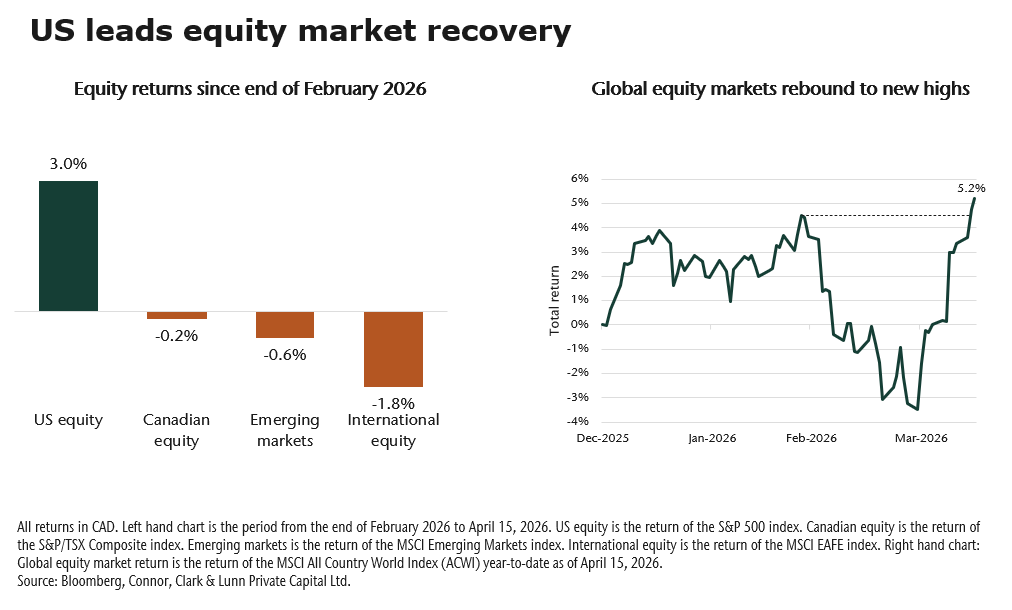
This week’s rally was driven by falling oil prices, lower bond yields, and improving sentiment—not a fundamental resolution of the risks. Since the onset of the conflict, market dynamics have been driven by one key channel: oil, inflation expectations, and interest rates. Early on, rising oil prices pushed inflation expectations higher, bond yields moved up, and equity markets sold off—most notably United States (US) technology stocks. (These companies are more sensitive to interest rates as they have higher valuations.) As a result, the US—where technology dominates—led the decline.
That dynamic has now reversed. As expectations for an escalation have moderated, oil prices have stabilized. This has eased inflation concerns, brought bond yields lower, and supported a rebound in higher-valued parts of the market.
Large-cap technology and artificial intelligence (AI)-related stocks have been the primary beneficiaries. As yields have fallen, leadership has quickly returned. In addition, US technology stock valuations have fallen 29% since the start of the conflict at the end of February — a decline that may be overdone. Given their significant weight in US indices, this has driven much of the market recovery and explains why the US is now leading markets on their way back up.
Earnings remain supportive
Early results from second-quarter reporting are encouraging, with little evidence business conditions are weakening. In fact, analysts have been raising earnings expectations in key areas such as energy and technology.
This reflects where fundamentals stand today. The more important question is whether earnings can remain resilient if the conflict persists and begins to weigh on economic activity.
The consumer is the pressure point
The consumer sits at the centre of this outlook. Spending has remained resilient, but it will be tested if energy prices stay elevated. Higher energy costs act like a tax on households, while lower savings rates reduce their ability to absorb further pressure.
At the same time, sentiment is weakening as inflation concerns persist. If spending slows, it will directly challenge earnings—particularly in sectors with less pricing power.
The bottom line
The market advance is being driven by improving expectations, not confirmed outcomes. Earnings are holding, but, they increasingly depend on a still-resilient consumer. At the same time, markets remain highly sensitive to oil prices and inflation expectations, leaving little room for disappointment.
For investors, this is an environment that requires balance. It doesn’t pay to be overly defensive. There is a clear case for staying disciplined and selective.