April 06, 2026

Key takeaways
- Inflation risk is back. Higher oil prices are lifting inflation expectations and pushing out rate cuts, increasing the risk of tighter financial conditions if sustained.
- AI is being reassessed. The focus is shifting to returns on investment—and which companies benefit versus those at risk of disruption.
- Leadership is broadening. Markets are less driven by US mega-cap tech, making returns more dependent on where you are invested.
The first quarter of 2026 delivered no shortage of headlines—geopolitical tensions, Artificial Intelligence (AI) concerns, and renewed trade uncertainty. The more important story is this: markets absorbed it all without breaking. Despite rising volatility, declines remained contained. That tells us something significant about the underlying environment: this is a market recalibrating to rising uncertainty, not repricing for a significant downturn.
What's moving markets?
1. Inflation is back in focus
Escalating tensions in the Middle East in March pushed oil prices higher, forcing a reassessment of the inflation outlook. Importantly, the move appears driven more by transportation and supply disruptions than a loss of production capacity. This suggests prices could fall if supply chains normalize.
Even so, the near-term impact has been clear. Higher oil has lifted inflation expectations and pushed out the timing of rate cuts, leading to weakness across both equities and bonds. This challenges the prevailing narrative coming into 2026—that inflation would steadily decline and allow for policy easing—and reinforces the risk of a higher-for-longer rate environment.
The path forward will depend on how this evolves. The magnitude of the impact is less about the initial shock and more about duration: how long the conflict persists, whether inflation expectations become more entrenched, and the extent to which higher oil prices begin to weigh on growth. If pressures prove temporary, markets are likely to continue absorbing the shock. If they persist, the risk shifts toward a more meaningful tightening in financial conditions and a broader impact on both growth and asset prices.
2. AI is entering a more selective phase
The AI theme remains intact, but the market is becoming more discerning for two key reasons. First, investors are paying closer attention to the economics. The level of spending on AI is significant, and it is still unclear how quickly that investment will translate into meaningful revenue and profits. As companies continue to invest heavily—often using debt—there is a growing focus on whether the returns will justify the cost.
Second, the market is rethinking who actually benefits from AI. Some companies that were once seen as clear winners—particularly in software and professional services—are now being viewed as vulnerable. AI has the potential to lower barriers to entry and reduce pricing power, which puts pressure on existing business models.
The result is a more selective market. Investors are starting to distinguish more clearly between companies that can turn AI into real earnings and those that may struggle to adapt. The AI story is not weakening, but it is becoming more focused on winners and losers.
3. Leadership is broadening beyond US mega-cap tech
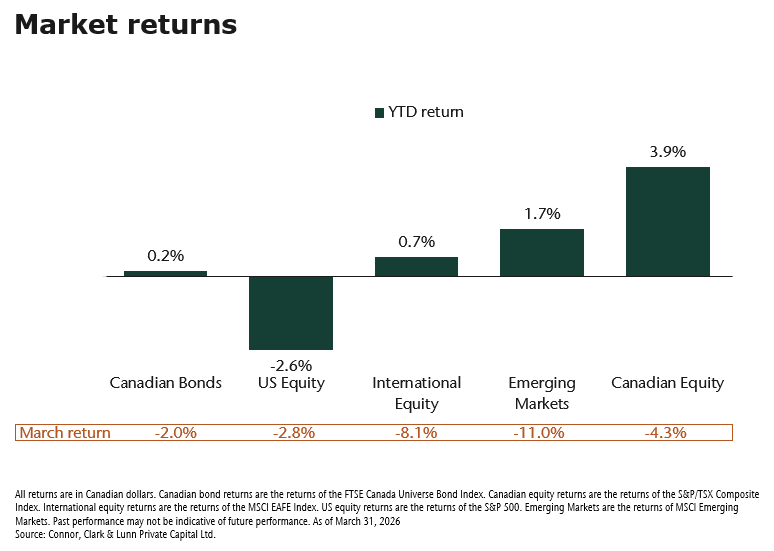
One of the more constructive developments this quarter has been the continued broadening of market leadership. Non-United States (US) markets, including Canada, have outperformed. Canadian equities in particular benefited from higher oil prices and lower exposure to technology, highlighting how regional exposures are increasingly driving outcomes. This shift toward broader participation is a healthier foundation for markets, but it also means returns are becoming more dependent on positioning.
The bottom line
Markets are adjusting to a more complex environment. Inflation has become less predictable—partly due to higher oil prices—while central banks have less flexibility to respond. At the same time, the backdrop remains supportive: growth is slowing but still positive, earnings expectations remain strong, and the AI investment cycle continues to underpin corporate spending.
This dynamic has resulted in periodic volatility, but no sustained decline in markets. However, the nature of returns is changing. Outcomes are becoming increasingly dependent on where investors are positioned—across sectors, regions, and themes like AI—and how effectively companies translate growth into earnings. In this environment, thoughtful portfolio construction and selectivity matter more than simply maintaining broad market exposure.