March 20, 2026

Key takeaways
- Markets remain resilient, supported by stable earnings expectations.
- Bond yields have risen as expectations shift from rate cuts to higher-for-longer policy.
- Elevated energy prices could lead to more persistent inflation, slower growth, and a further market decline.
Markets have broadly taken the Middle East conflict in stride. Global equities1 are down only about 5% since late February and global bonds2 have shed roughly 2%. This relatively modest reaction is notable given the sharp rise in energy prices and a shift in central bank guidance away from rate cuts toward renewed inflation concerns.
Why the relatively limited impact to equities?
One of the main reasons equities are holding up is that the earnings forecasts underpinning valuations remain stable. Even excluding the energy sector, where higher oil prices have provided a boost, expectations for corporate earnings this year have not meaningfully changed. As long as earnings expectations hold, they provide an important anchor for stock prices and help limit downside risk.
That said, this stability may reflect uncertainty rather than conviction. Analysts are likely waiting for more clarity on the duration of the conflict before adjusting forecasts. If disruptions persist, earnings expectations could be revised lower in the weeks ahead.
Investor sentiment also remains relatively steady. The latest Bank of America Global Fund Manager Survey shows investors are taking slightly less risk, reflecting a modest increase in caution. However, positioning remains far from the more defensive levels seen in 2022 or following the Liberation Day tariffs a year ago, suggesting markets are adjusting in a measured way rather than reacting with broad concern.
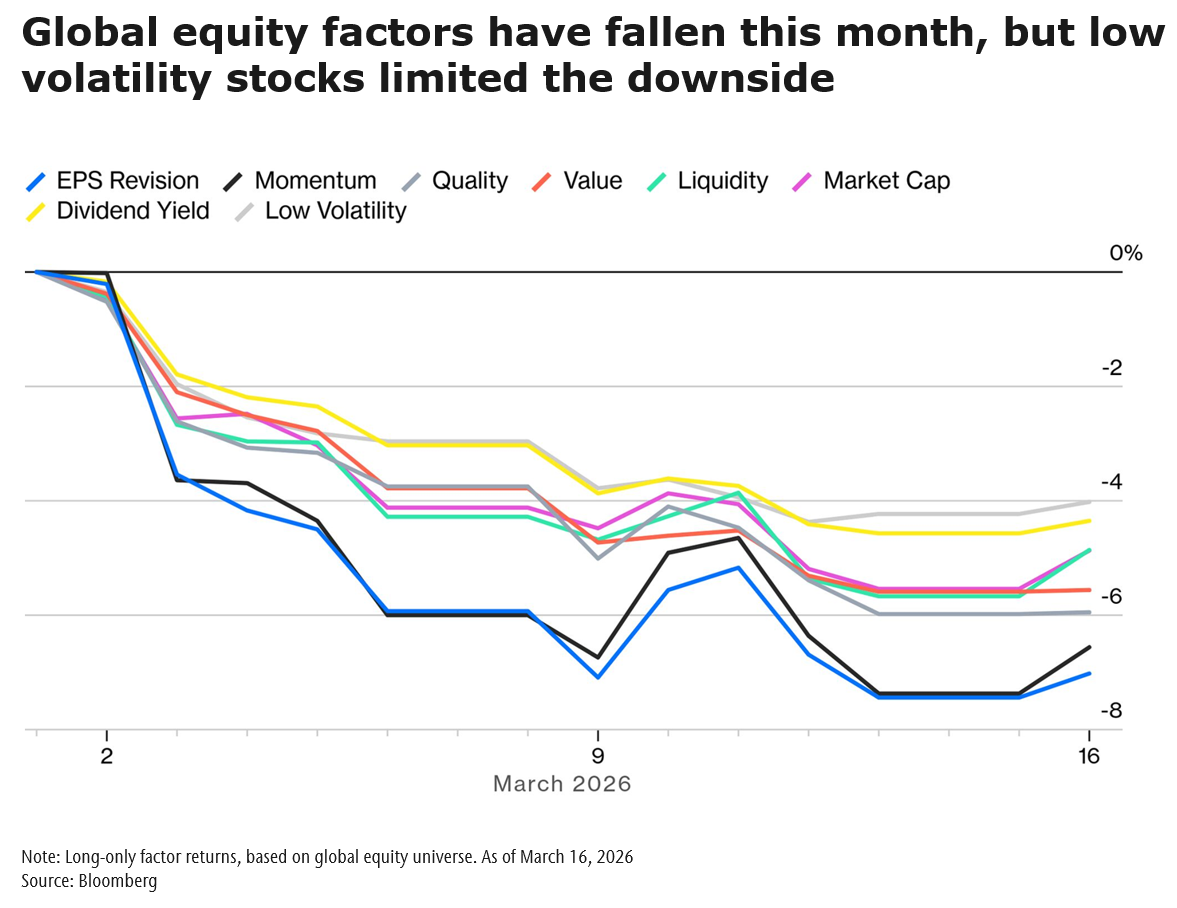
Factor performance in March also points to a slight defensive tilt, with low-volatility and high dividend stocks holding up relatively better and helping cushion the broader market decline.
What about bonds?
The bond market has been more sensitive to this shift in the outlook. Rising energy prices and evolving central bank guidance have led investors to reassess the path for interest rates, pushing yields higher and weighing on bond prices. This adjustment has been most pronounced in shorter-term bonds, which are more directly tied to policy expectations.
Importantly, the move reflects a change in expectations rather than a loss of confidence in bonds. Markets have moved away from anticipating near-term rate cuts and are now pricing a more prolonged period of higher rates. While this has created near-term pressure, it also means yields are adjusting to levels that better compensate investors for inflation and policy uncertainty.
We continue to maintain exposure to a market-neutral strategy that is less dependent on the direction of interest rates. This allocation is funded from traditional bonds and is intended to help offset fixed income exposure in a higher yield environment. So far this year, the approach has been effective, with the market-neutral strategy materially outperforming the Canada universe bond index.
Looking through inflation…at least for now
The focus for central banks has shifted back toward inflation risks following the sharp rise in energy prices. While central banks including the Federal Reserve, Bank of Canada, European Central Bank and Bank of England all held rates steady this week, their tone was cautious.
Higher oil prices are expected to lift inflation in the near term, but the key risk is whether these pressures broaden into wages and core inflation. If so, central banks have signaled they are prepared to respond. For now, policymakers are in a wait-and-see mode.
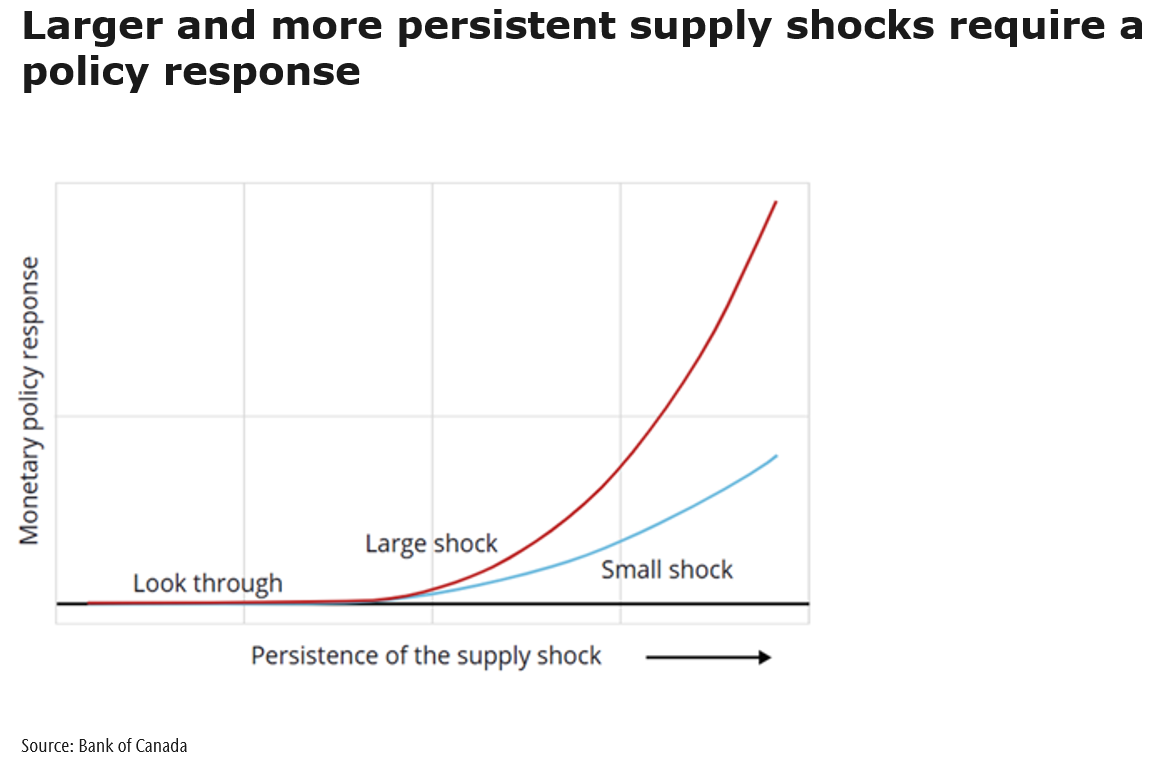
What remains to be seen is whether inflation expectations become more ingrained. While the current supply shock is understood, it is difficult to imagine that growth will not slow, at least temporarily, particularly if energy prices remain elevated.
The bottom line
Overall, markets are navigating a more uncertain environment, but the adjustment so far has been orderly. The key variables from here will be the duration of the energy shock and whether it feeds more persistently into inflation and growth. If pressures remain contained, stable earnings should continue to support markets. However, a more prolonged disruption would likely test both earnings expectations and the path for monetary policy. While near-term uncertainty has increased, the underlying backdrop remains constructive, and we continue to position portfolios to balance resilience with long-term opportunity.