March 13, 2026
Key takeaways
- Oil prices are driving markets.
- History suggests oil shocks are temporary for equities.
- Supportive economic fundamentals could allow the bull market to resume.
The dominant issue facing markets right now is the renewed surge in oil prices. The concern is that energy prices may not revert quickly to more normal levels. As the effective closure of the Strait of Hormuz continues, it is becoming increasingly clear that there is a meaningful risk oil prices remain elevated for longer than markets first expected.
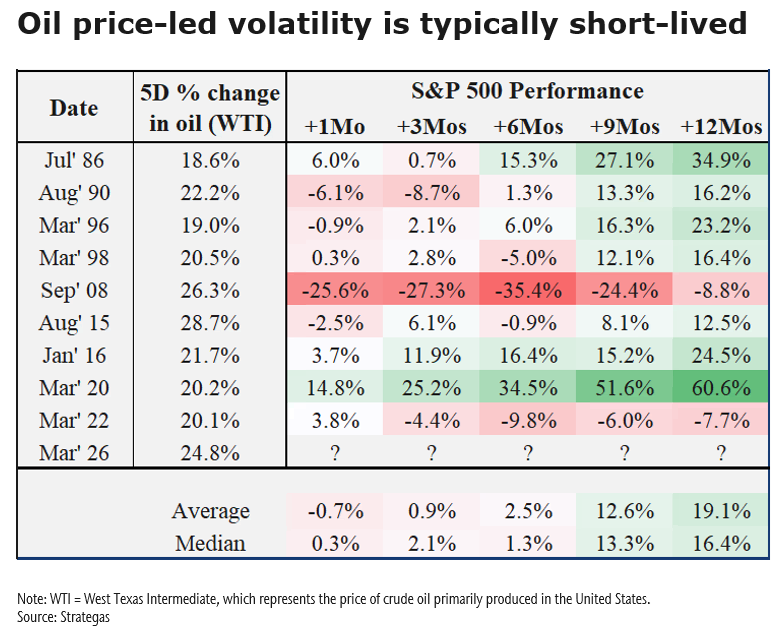
The impact has been visible in balanced portfolios as equity and fixed income markets extended losses this week. In Canada, the decline was compounded by a pullback in gold prices as bullion retreated alongside a rebound in the US dollar. A reminder that in periods of stress, investors often gravitate toward the dollar as the primary safe haven.
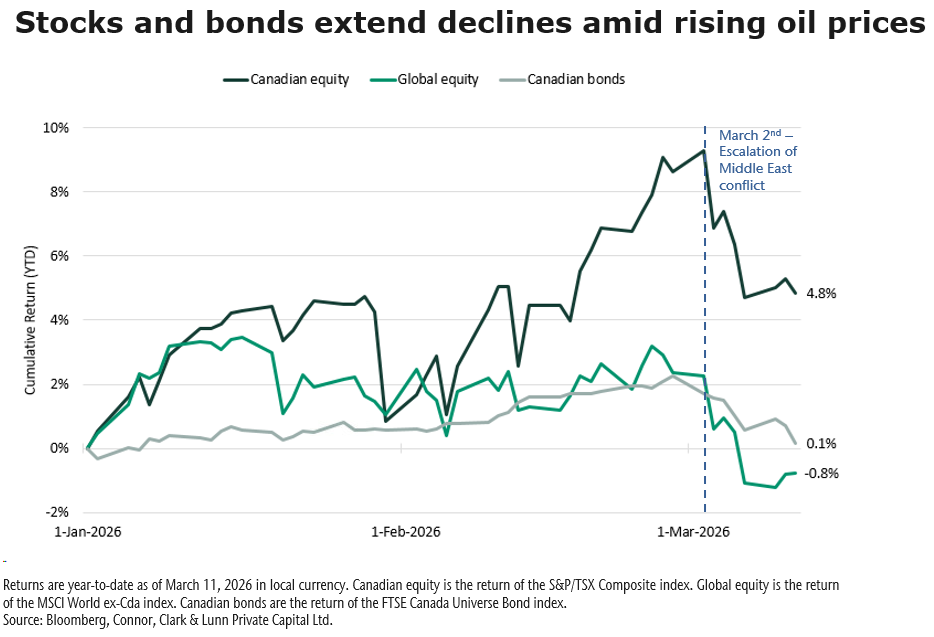
Naturally, sharp moves in oil prices generate anxiety among investors. Looking at history can help put these episodes into perspective. When oil experiences a similarly significant five-day price surge, equity markets typically struggle in the near term. Over the following six months, returns tend to be muted as higher energy prices weigh on sentiment, inflation expectations, and economic forecasts.
However, the longer-term picture is more constructive. Historically, markets begin to digest the shock as the economy adapts and investors gain clarity on the broader impact. On average, the S&P 500 has been approximately 19% higher twelve months after these types of oil price spikes. In other words, while energy shocks can disrupt markets in the short run, they have not historically prevented equities from advancing over the following year.
Is the bull market still intact?
Despite the recent volatility, there is still a credible case for the bull market to resume. We do not have an edge in forecasting geopolitical outcomes, so rather than speculate, we focus on the implications for markets under two scenarios.
In a de-escalation scenario, tensions ease and shipping lanes remain open, allowing oil prices to fall back toward more normal levels and limiting the economic impact of the recent spike. Markets would likely shift their focus back to core drivers such as earnings growth, continued investment in artificial intelligence infrastructure, and global policy developments. In that environment, equities could lead the recovery, with cyclical sectors such as consumer discretionary, industrials, and financials benefiting most as concerns about higher gasoline prices fade.
A second possibility is that shipping disruptions persist even without a significant loss of oil production. In this case, oil prices could remain elevated and push headline inflation higher. However, central banks may look through the increase if it reflects temporary supply disruptions rather than stronger demand. Markets could remain choppy in the near term, but underlying economic resilience could still support equities. Leadership would likely come from higher-quality cyclical and growth sectors, while some defensive areas that rallied early in the conflict may lag.
Taken together, these scenarios suggest geopolitical shocks can interrupt market momentum but do not necessarily derail the broader expansion in equities. If the global economy remains stable and the oil shock proves manageable, the current volatility may ultimately represent a pause rather than the end of the bull market.
Positioning
We entered this period of heightened geopolitical tension with a balanced risk posture, reflecting our view that the economic cycle is mature but still supported by underlying momentum. As a result, portfolios carried only a modest overweight to equities rather than an aggressive risk position. Importantly, our investment process is not built on predicting geopolitical events. Instead, we focus on how developments ultimately affect economic trends and market pricing. At this stage, while oil prices have become the key driver of investor sentiment, the recent market pullback has not yet created the types of fundamental dislocations that would warrant a significant shift in positioning. We will continue to monitor developments closely and adjust portfolios if conditions change.