March 06, 2026
Key takeaways
- The duration of the conflict—not the headlines—will determine the market impact.
- For markets, the critical issue is whether higher oil prices translate into sustained inflation pressure.
- Our portfolios are positioned to withstand volatility and are built for a range of outcomes.
The events unfolding in the Middle East are deeply concerning from a humanitarian perspective. From a market standpoint, volatility has risen as investors assess the potential economic consequences. The key question, however, is whether the conflict meaningfully alters the global economic outlook. So far, the economic implications may be less dramatic than the initial market reaction. If that remains the case, we expect volatility to ease in the coming weeks.
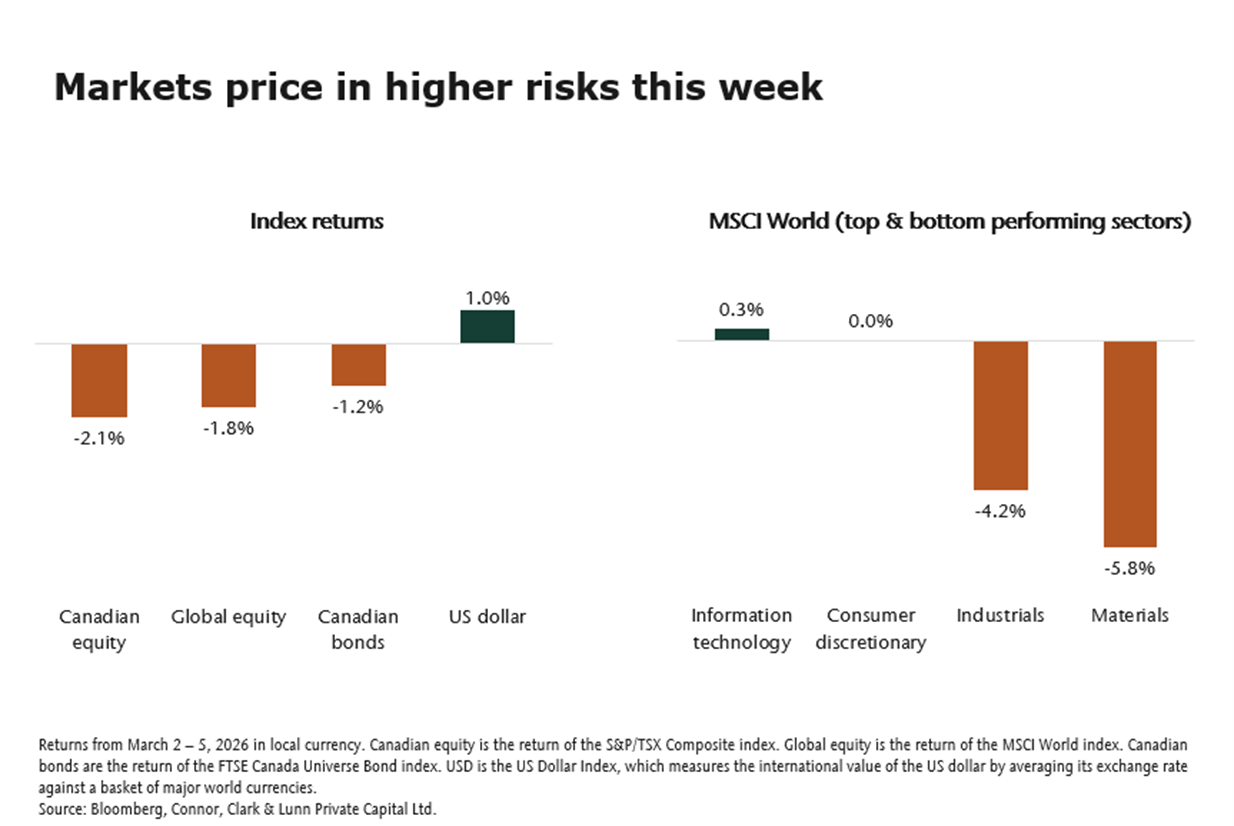
The most significant market move has been in energy prices. Oil has risen sharply, reflecting concerns about supply disruptions. At the same time, the United States (US) dollar has temporarily strengthened as investors seek safety. Equity markets have declined, particularly in those sectors that are sensitive to slower growth and higher inflation. Notably, bonds have also fallen. This simultaneous decline in stocks and bonds is something we have seen repeatedly in recent years when inflation becomes the dominant concern.
Market impact dependent on duration of the conflict
It is hard to predict how long this conflict will persist. The decline in markets revolves around this uncertainty. If the conflict lasts more than a few weeks, it may lead to a more sustained period of higher oil prices which we expect will push inflation higher and economic growth lower. This would put continued pressure on both equity and bond markets.
The shock to oil prices is a transport problem. The Strait of Hormuz, in the Middle East, is a shipping lane through which approximately 20% of the world’s oil supply passes. A full closure of the strait by Iran is unlikely due to the negative impact on their economy. However, given the current state of the conflict, shipping volumes are negligible. The longer this lasts, the larger the impact on markets and the global economy will be.
In short, a brief disruption would likely result in temporary volatility. A prolonged disruption would create more sustained inflation pressure and tighter financial conditions. That distinction will determine whether this episode proves to be a short-lived shock or something more structural.
What is the trade?
In periods like this, discipline is essential. We are not attempting to predict geopolitical outcomes. Instead, we are assessing inflation dynamics, policy expectations, and cross-asset behavior to determine whether the environment is shifting in a lasting way. At this stage, we are making measured adjustments rather than wholesale changes.
Within our Canadian core equity portfolio, we have modestly increased exposure to integrated oil companies and pipeline operators, which may benefit if oil prices remain elevated. At the same time, we have slightly reduced exposure to more economically sensitive cyclicals and reallocated toward businesses with greater earnings stability during periods of uncertainty.
At the total portfolio level, we remain underweight traditional long-duration bonds. We continue to favour shorter-term, higher-yielding global bonds and mortgages, which provide income with less sensitivity to rising yields. We also maintain exposure to a market-neutral strategy that isn’t affected by whether interest rates rise or fall. This is funded from money we would have allocated to traditional bonds, and it’s designed to help our portfolio perform across a range of interest rate environments. Overall, portfolios are positioned to navigate a temporary increase in inflation and somewhat higher bond yields without relying on any single outcome.
Getting through with a long-term view
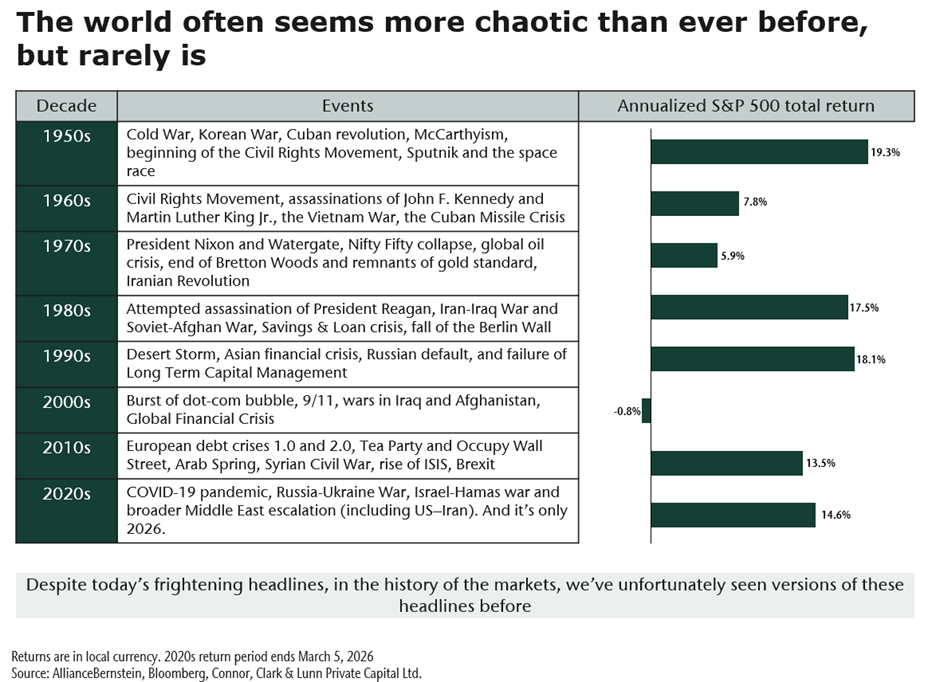
It is important to maintain perspective. Geopolitical conflicts are not new to financial markets. What determines lasting economic impact is not the headline itself, but whether the event disrupts critical supply channels or triggers broader financial stress.
History shows that equity markets have generally proven resilient to geopolitical shocks unless they fundamentally alter growth or monetary policy trajectories. Over longer periods, economic growth and corporate earnings remain the primary drivers of returns.
We will continue to monitor developments closely, particularly the duration of energy supply disruptions and the evolution of inflation expectations. At this stage, we view this as a volatility event rather than a structural shift in the global outlook. Our portfolios remain diversified and thoughtfully positioned to navigate a range of potential outcomes.
Staying disciplined, rather than reactive, remains the appropriate course.