At the end of September, we highlighted how strong corporate earnings were supporting equity markets despite rising bond yields and increasing concentration in artificial intelligence (AI)-related stocks. October brought a change in market leadership. AI demand and investment continued to accelerate, but rising financing costs raised questions about the returns companies will earn from this enormous spending. Meanwhile, investors became increasingly concerned that persistent inflation and elevated interest rates could eventually weaken economic growth. These concerns supported a recovery in government bonds and renewed interest in previously neglected defensive stocks.
A more cautious equity market
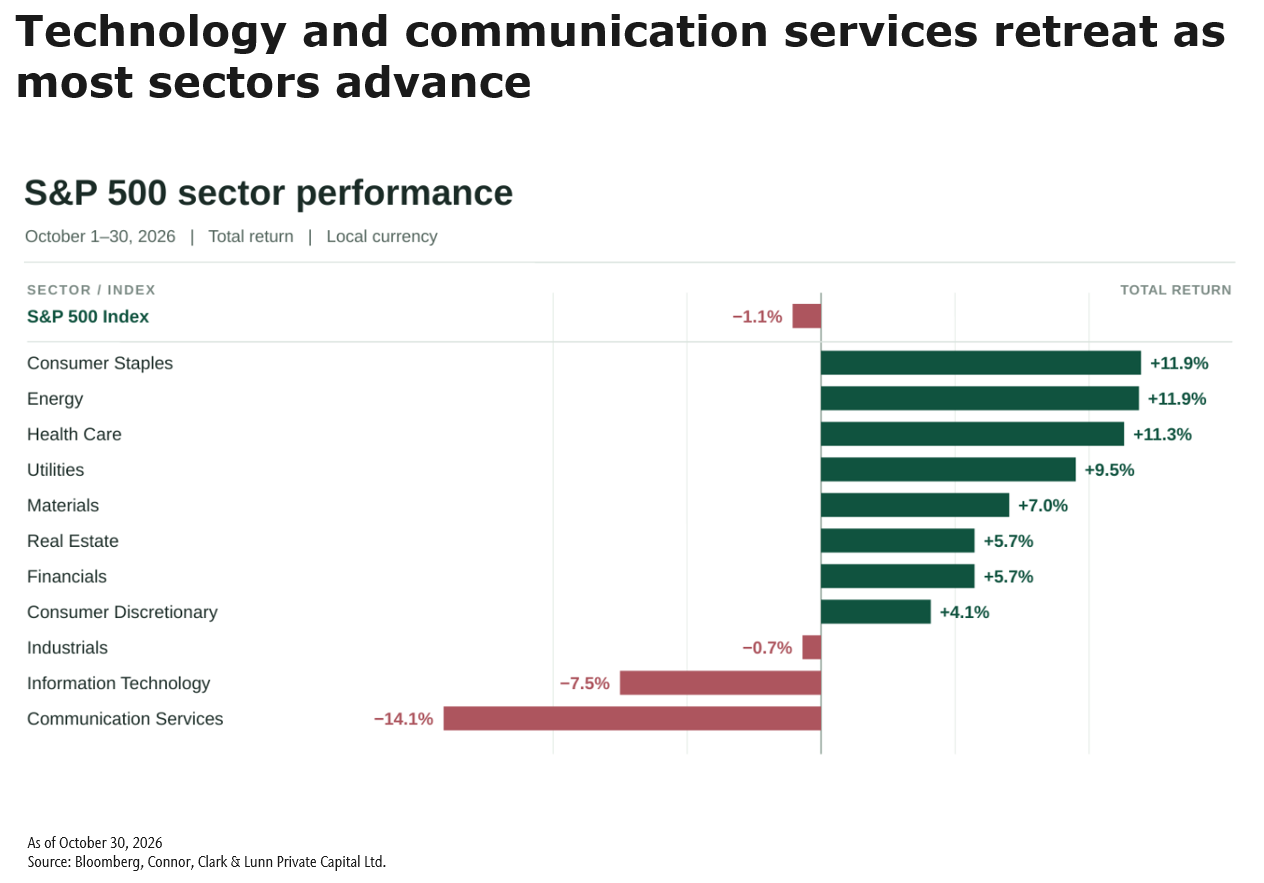
October's broader sector gains are an encouraging sign of a more balanced market, but the sectors leading the advance point to growing caution among investors. Healthcare and consumer staples, which had previously lagged, were among the strongest performers. Their relatively stable earnings become more appealing as concerns about future economic growth increase. Energy also performed well, supported by higher oil prices, which added to inflationary pressures and raised costs in the broader economy. Wider market participation is welcome, but October's leadership also reflects a growing preference for resilience.
AI's growing financing challenge
AI is moving from promise to practice. AI Adoption and demand for computing power are accelerating, even as AI-related stocks are struggling. Semiconductor stocks, among the biggest beneficiaries of AI investment, fell sharply in October despite strong earnings expectations. The concern is less about demand and more about the cost of meeting it. Higher interest rates are increasing financing costs, while enormous investment commitments are raising the bar for future profitability. We estimate that the five major AI investors could spend $2.2 trillion over the next two years. With expectations already elevated, however, even strong growth may not be enough to impress investors.
The pressure is particularly evident among highly leveraged AI infrastructure companies, known as neoclouds, which borrow heavily to build data centres and rent computing capacity. Some of these companies have experienced steep share-price declines as investors question whether future revenues will justify their growing debt. Larger technology companies have stronger financial resources but face similar questions about investment returns. The implications extend beyond technology stocks. If financing constraints or disappointing returns cause infrastructure spending to slow, an important source of United States (US) economic growth could weaken even as AI adoption continues to accelerate.
The balance of economic risks is shifting
The US economy remains strong, but investors are increasingly questioning whether that momentum can continue. The past 15 months have delivered exceptional economic growth and earnings improvements. With inflation remaining elevated and borrowing costs rising, another period of similarly strong positive surprises looks less likely. Recent signs of pressure on household purchasing power add to concerns that higher interest rates could eventually weigh on consumer spending and business investment. Complicating the outlook, market expectations for inflation have begun rising again.
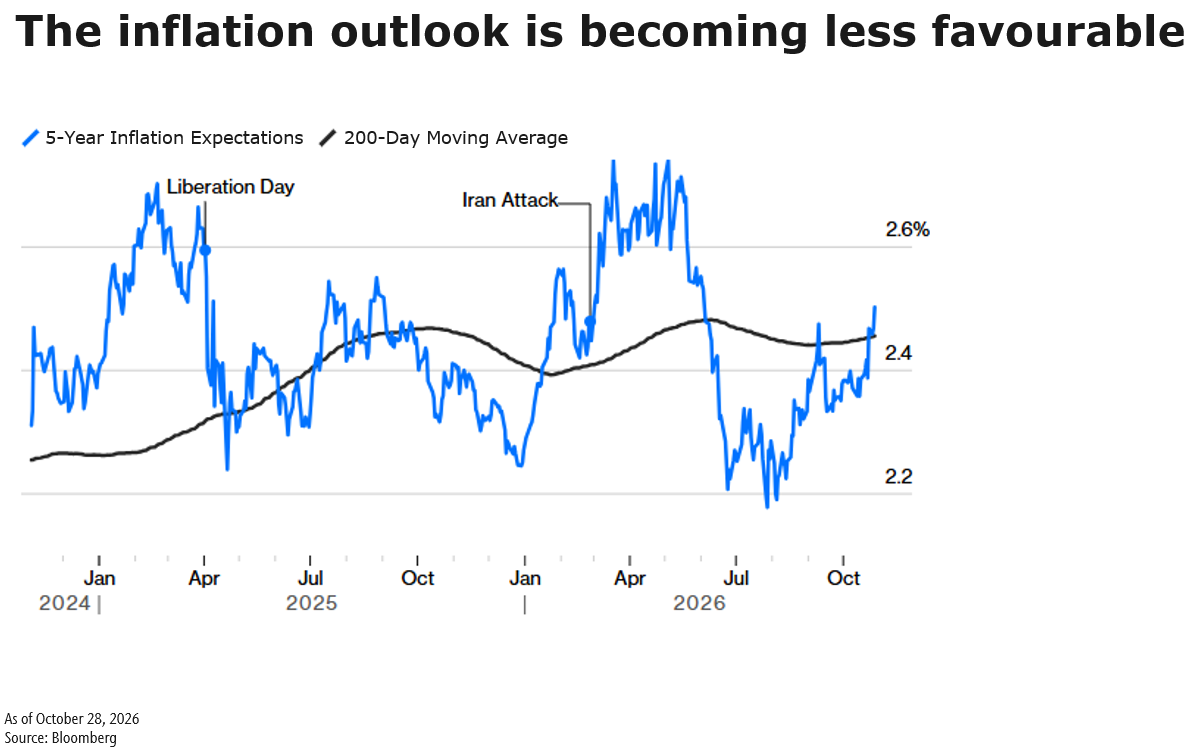
October's bond market provides an interesting signal of this changing outlook. Despite elevated inflation and rising oil prices, government bond yields declined as concerns about slower growth became more prominent. This marks a shift from recent months, when strong economic data largely reinforced expectations for higher yields.
More opportunities despite rising risks
We remain constructive on AI's long-term potential, but October reinforced the importance of being diversified across the theme and focusing on quality. AI technology is advancing rapidly, yet not every company financing its expansion will earn attractive returns. We favour businesses with strong finances, durable earnings and the ability to convert growth into cash flow. Beyond AI, broadening market participation is creating opportunities for value-oriented companies, particularly as elevated interest rates increase the importance of current profitability and reasonable valuations. Our quantitative strategies have also navigated shifts in market leadership well, demonstrating the benefits of diversifying across investment approaches.
The broader outlook remains supported by healthy corporate earnings, although slower growth and persistent inflation create a more challenging environment. Higher bond yields provide attractive income and improve the potential for bonds to protect portfolios if growth disappoints. Ultimately, October's market rotation reinforces our approach to portfolio construction: participate in long-term growth opportunities without relying on any single investment theme, while maintaining multiple sources of return to navigate changing market conditions.