November 20, 2026

Key takeaways
- Anthropic's volatile stock market debut following its record IPO reflects growing concerns about whether AI investment will deliver the profits needed to justify elevated stock valuations.
- This week's selloff continues a historic reversal that began this summer, as investors unwind crowded AI trades and previously overlooked stocks outperform.
- AI remains a powerful investment opportunity, but the recent reversal highlights the risks of chasing market winners and the importance of finding opportunities beyond the most popular stocks.
Anthropic's record-breaking initial public offering (IPO) was expected to reignite enthusiasm for artificial intelligence (AI). Its shares initially surged but quickly surrendered much of their gains as the broader market continued to decline. The weakness extends well beyond one company. After years of exceptional gains, many AI-related stocks have fallen sharply, with some experiencing substantial declines from highs. Investors are increasingly questioning whether the enormous investments being made in AI will generate the profits needed to justify today's valuations.
The long-term potential of AI remains substantial. Demand for computing power continues to support extraordinary investment in data centres, chips and infrastructure. However, financial risks are growing as spending is rising faster and more companies are turning to external financing. As the chart below illustrates, it is estimated that industrywide AI revenues would need to approximately double every year through 2030 to justify current investment plans. Even if AI adoption continues to accelerate, achieving that level of revenue growth will be an extraordinary challenge.
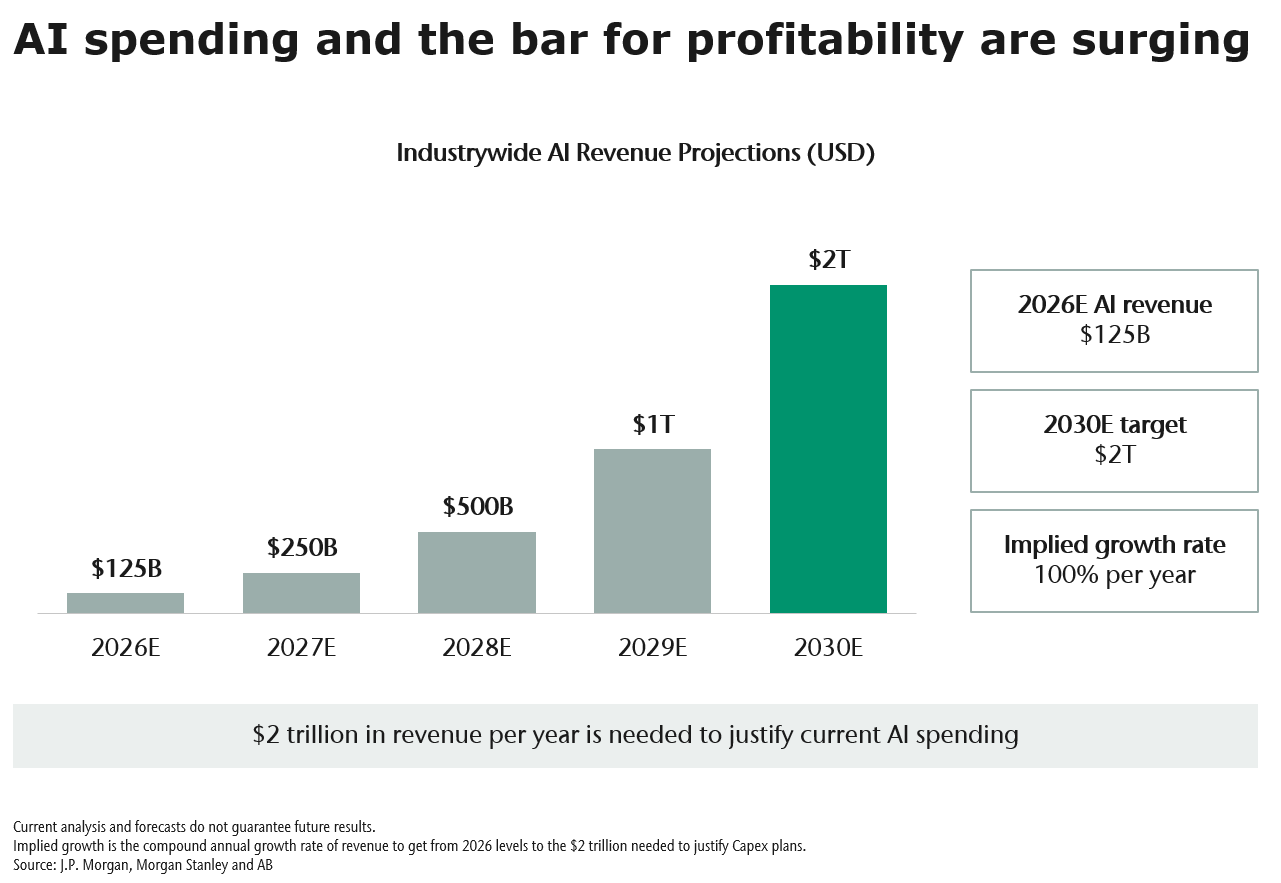
The AI trade has been unwinding since June
The recent equity market weakness is part of a much larger shift that began this summer. For much of the past few years, investors crowded into companies benefiting from AI investment while avoiding businesses perceived to be at risk of disruption. As questions emerged about whether AI spending could continue growing at such an extraordinary pace, investors began reassessing the earnings prospects of companies supplying the infrastructure. With stock prices already reflecting years of exceptional growth, even modest changes in expectations contributed to significant declines. The selling was amplified as investors holding similar positions began reducing their exposure simultaneously.
While AI-related stocks have come under pressure, other areas of the market have performed much better. Investors have been returning to previously overlooked companies, particularly those trading at lower valuations, driving a sharp recovery in value stocks relative to growth stocks. The shift has been extraordinary, with the momentum factor, which favour stocks with strong recent returns, experiencing its largest drawdown since the Global Financial Crisis. As the chart below illustrates, market leadership has changed dramatically since June. Importantly, this reflects both changing expectations and the unwinding of crowded positions, rather than clear evidence that the broader economic and corporate earnings outlook has deteriorated.
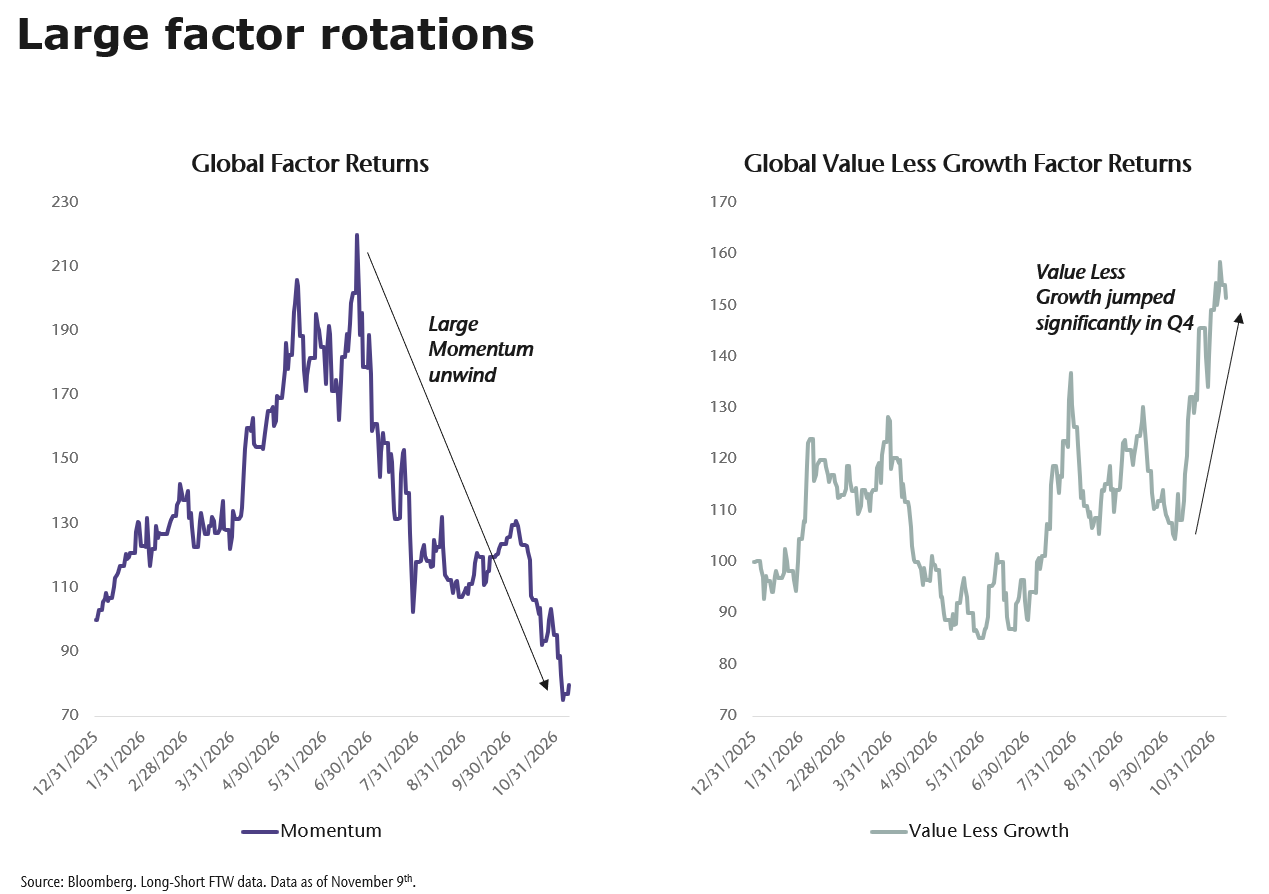
The value of owning what others have overlooked
For several years, diversified portfolios struggled to keep pace with markets dominated by AI-related companies. Now, some of the investments that lagged during that rally are outperforming. This illustrates the risks of allocating too much of a portfolio to recent winners and the value of maintaining exposure to investments with different drivers of return. Rather than trying to time shifts in market leadership, the goal is to build portfolios that can deliver more consistent returns across changing market conditions.
AI makes this particularly challenging because its influence extends well beyond technology stocks. Enormous investments in data centres, energy and infrastructure are supporting economic growth while increasing demand for capital, electricity and other resources, with implications for inflation and interest rates. These effects create opportunities and risks across industries and asset classes, including companies with little direct exposure to AI. Capturing the benefits of this transformation requires looking beyond the most obvious winners and understanding how its effects ripple through the broader economy.