October 16, 2026
.jpg?sfvrsn=bd4fb38c_1 "iStock-2075787016 (1)")
Key takeaways
- September’s inflation surprise extended beyond energy, reinforcing the risk that inflation and borrowing costs remain elevated.
- Recent market leaders came under pressure as high borrowing costs intensified scrutiny of AI spending.
- Headline index moves have masked larger shifts between individual stocks as investors become more selective.
Artificial intelligence (AI)-related earnings have helped markets withstand higher borrowing costs. This week, that support was tested as inflation exceeded expectations and investors questioned how enormous AI investments would be financed—and whether they would deliver adequate returns. Healthcare and consumer staples gained ground, while many chipmakers and some AI infrastructure businesses came under pressure, pointing to a more selective market.
Inflation is not just about oil
Headline inflation in the United States (US) rose to 3.7% year over year in September, up from 3.4% in August. Gasoline and other fuels accounted for more than half of the monthly price increase. While the Iranian conflict continued to keep energy costs elevated, the pressure extended beyond fuel. Housing rents and hotel rates rose more than expected, and airfares continued to climb.
Higher energy costs are also feeding into other prices, while strong demand from AI investment may be adding to inflationary pressures. More expensive computer chips, for example, may be pushing up the cost of certain goods. The concern is that these pressures could spread more widely, making inflation harder to bring down. However, within the real estate sector, rents on new leases still point to slower housing inflation ahead.
Persistent inflation keeps further Federal Reserve (Fed) rate increases in play, even if policymakers pause at their next meeting. That puts particular pressure on companies that need to borrow to fund investment or refinance existing debt. Higher interest payments can squeeze profits and leave less cash available for growth. Those businesses that can fund investment with cash from their operations are less exposed.
Strong demand, tougher economics
AI illustrates this growth-funding distinction. Demand remains exceptionally strong, with rapid revenue growth. Yet investors are looking beyond that growth to the scale of spending required, how it will be financed, and whether future cash flows will justify the investment.
For businesses committing heavily to data centres and computing infrastructure, expensive financing makes the calculation more demanding. Strong sales growth alone may not be enough if investment and interest costs absorb much of the cash generated. The issue is not simply whether AI demand will grow, but whether that growth can produce attractive returns on the money being invested.
The index does not tell the whole story
These differences help explain why the market can feel more unsettled than the headline index suggests. Before the inflation release, options prices pointed to larger expected swings in individual stocks while expected S&P 500 swings declined. By October 12, the average S&P 500 stock’s expected volatility was roughly three times that of the index, an unusually wide gap over the past year.
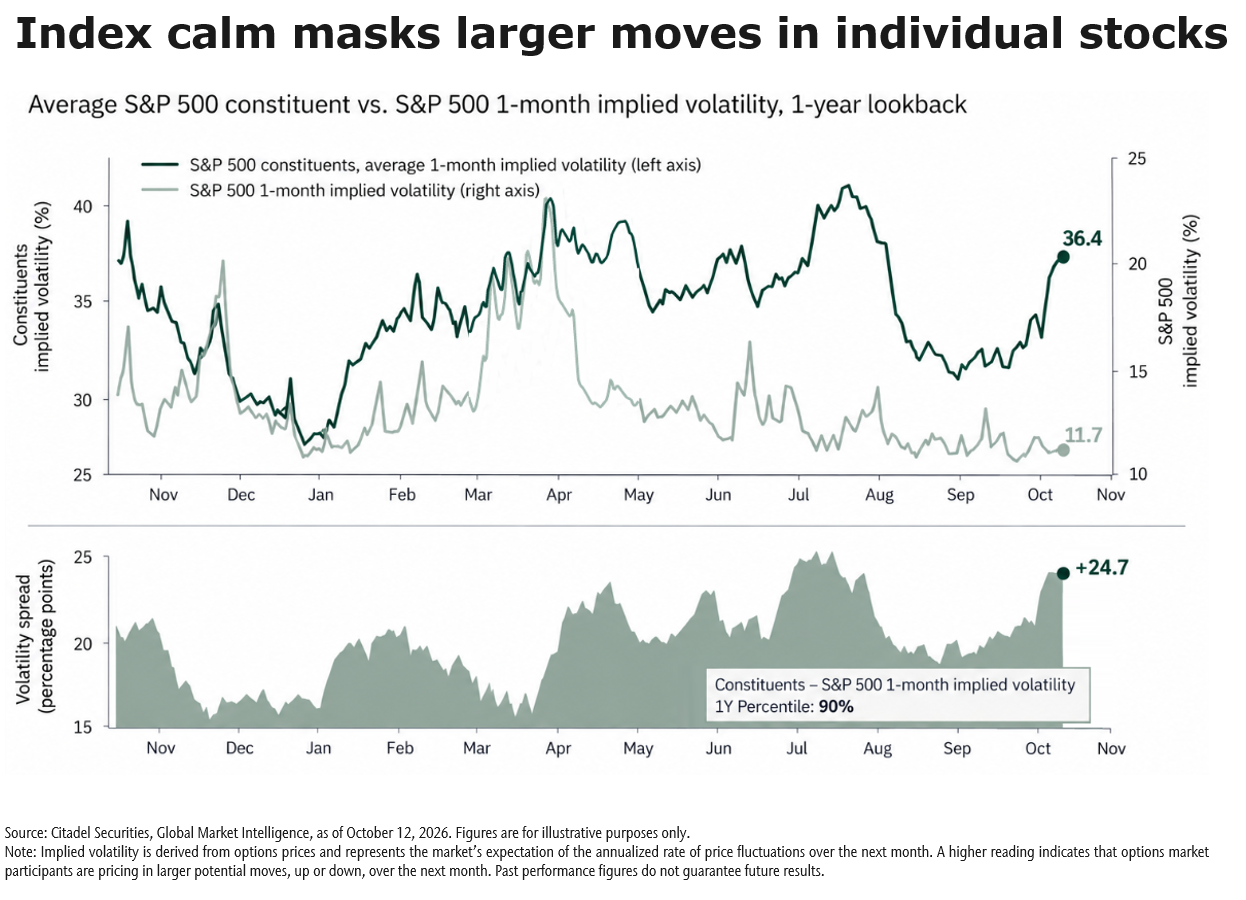
Gains in some stocks can offset losses in others, leaving the index relatively calm despite considerable movement underneath. That is diversification at work, not an absence of risk. Thursday’s contrasting moves across technology, healthcare and consumer staples illustrated how different the experience can be across parts of the same market.
A more selective market
For portfolios, this reinforces the importance of owning businesses with different sources of earnings, rather than owning several stocks dependent on the same investment cycle or theme. Company-specific fundamentals also become more consequential as investors distinguish between businesses with dependable cash generation and those relying heavily on financing and ambitious growth forecasts. Upcoming earnings and investment plans will help test those expectations.
Investor focus is on whether companies can sustain profits, fund their commitments, and justify their valuations. The question is not just which industries are growing, but which businesses can turn that growth into durable returns for investors.