October 02, 2026
-(1).png?sfvrsn=f91033d8_1 "Blog post header image (1) (1)")
Key takeaways
- Bond yields rose sharply as strong growth and persistent inflation kept upward pressure on interest rates.
- Equities held up because stronger earnings helped offset lower valuations, but headline indices mask much weaker performance underneath.
- We have broadened our equity positioning and maintained less exposure to longer-duration bonds.
Bond yields moved materially higher in September, which is typically a headwind for equity markets. Yet equities largely took the move in stride, as market fundamentals remain strong, supported by exceptional corporate earnings and solid economic growth. That strength helped offset the pressure from higher yields even as valuations, or the price investors are willing to pay for each dollar of earnings, declined.
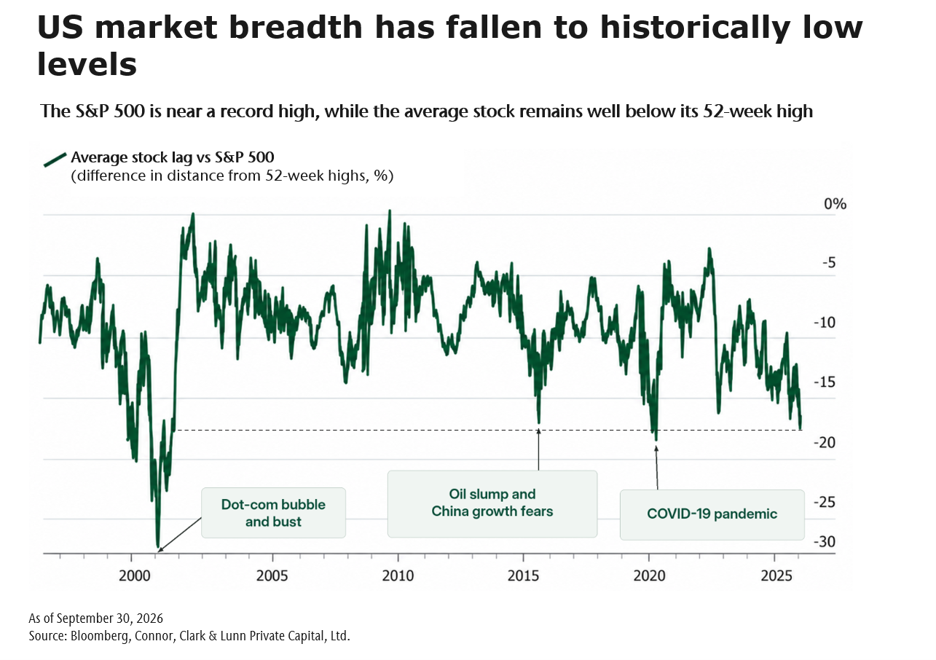
Headline indices therefore present a calmer picture than what is occurring. Major markets remain near their highs, but many stocks have fallen considerably, with a relatively small number of large companies continuing to support index returns. The market is not ignoring the risk from higher yields, as the resulting pressure is already showing up beneath the surface.
Why bond yields are moving higher
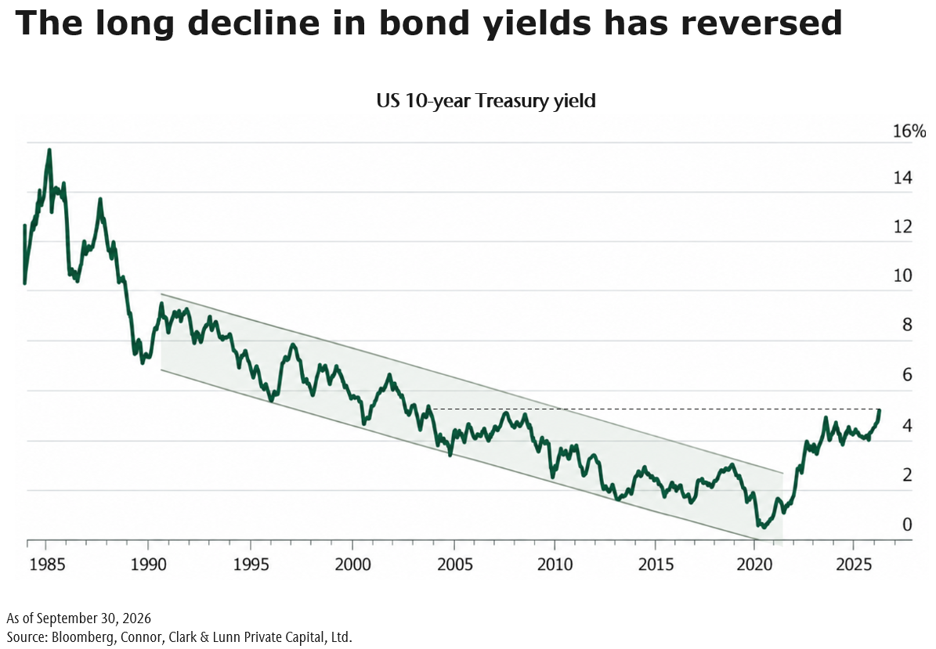
Bond yields have been rising since the summer as strong economic growth and more persistent inflation have kept upward pressure on interest rates. Business activity remains healthy, investment is strong and inflation is still above target. The Federal Reserve (Fed) increased rates in September in response to those pressures, reinforcing expectations that interest rates may need to remain elevated.
At the same time, demand for capital is unusually high. Large government borrowing needs are competing with significant corporate investment, particularly the enormous spending required to build artificial intelligence (AI) infrastructure. When governments and companies need to borrow more, yields generally need to rise to attract enough capital. Strong growth, persistent inflation and heavy borrowing are therefore all pushing in the same direction, helping explain the continued rise in bond yields shown below.
Earnings provide support as valuations fall
Higher bond yields are already changing what investors are willing to pay for equities. As bonds offer more attractive returns, equity valuations have moved lower, reducing the price investors are willing to pay for each dollar of future earnings. In other words, equities are absorbing some of the rise in yields through lower valuation multiples.
What has kept share prices near their highs is the strength of corporate earnings. Earnings forecasts and expected profit margins continue to rise, led by technology companies benefiting from the AI investment boom, with energy and materials also contributing. Stronger profits can offset lower valuations, allowing equity prices to hold up even as investors become less willing to pay a premium for those earnings.
That support, however, is not evenly distributed. Large AI-related companies continue to underpin index returns, while the average S&P 500 stock sits much further below its own 52-week high. The gap is among the widest of the past 30 years. The headline index therefore understates how much adjustment is already taking place beneath the surface.
Broadening participation while managing risk
Our positioning reflects both the opportunities created by strong fundamentals and the risks from higher yields. Within Canadian equities, we reduced exposure to utilities, real estate and pipelines, where higher bond yields can make stable income streams relatively less attractive and place greater pressure on valuations. At the same time, we added selectively to areas we have been underweight such as software.
In global equities, we have broadened our United States (US) exposure after carrying larger company and sector positions, particularly around the AI theme. We remain positive on the long-term opportunity, but valuations and expectations have risen and the hurdle for future returns is higher. Diversifying that exposure reduces reliance on a small number of companies while maintaining participation in the theme.
Within fixed income, we have reduced longer-term traditional bonds, which are more sensitive to rising yields, in favour of higher-yielding shorter-term bonds and mortgages. We also allocate to market-neutral strategies that seek returns less dependent on the direction of interest rates or markets. Together, these changes are intended to provide income and diversification while reducing the portfolio's sensitivity to further increases in long-term yields.
What matters next
The key question is whether earnings can continue to offset the pressure from higher yields. Inflation and the Fed remain central because persistent inflation could keep interest rates elevated or push them higher still. The backdrop would become more challenging if rising yields were also accompanied by weaker earnings or a meaningful increase in corporate borrowing costs.
For now, economic growth and corporate earnings remain supportive. Our portfolios reflect that balance through broader equity participation, less reliance on individual investment calls and reduced exposure to long-term interest-rate risk.