August 21, 2026

Key takeaways
- The Fed is increasingly likely to remain on hold this year, but borrowing costs are still rising.
- Higher yields raise the return hurdle for equities, particularly high-valuation AI companies.
- Rising yields reinforce our preference for credit over traditional bonds.
Long-term interest rates moved higher again this week even though the Federal Reserve (Fed) is increasingly likely to remain on hold this year. The 30-year United States (US) Treasury yield reached its highest level since 2007 on Monday as investors demanded greater compensation for persistent inflation, large government borrowing needs and strong demand for capital. The US Treasury responded by expanding its existing buyback program for longer-dated bonds to support liquidity after the selloff. That can improve market functioning, but it does not change the underlying pressures sustaining higher yields. The important message is that a Fed on hold does not mean borrowing costs are on hold, and if longer-term rates remain elevated, the hurdle for investment returns rises across markets.
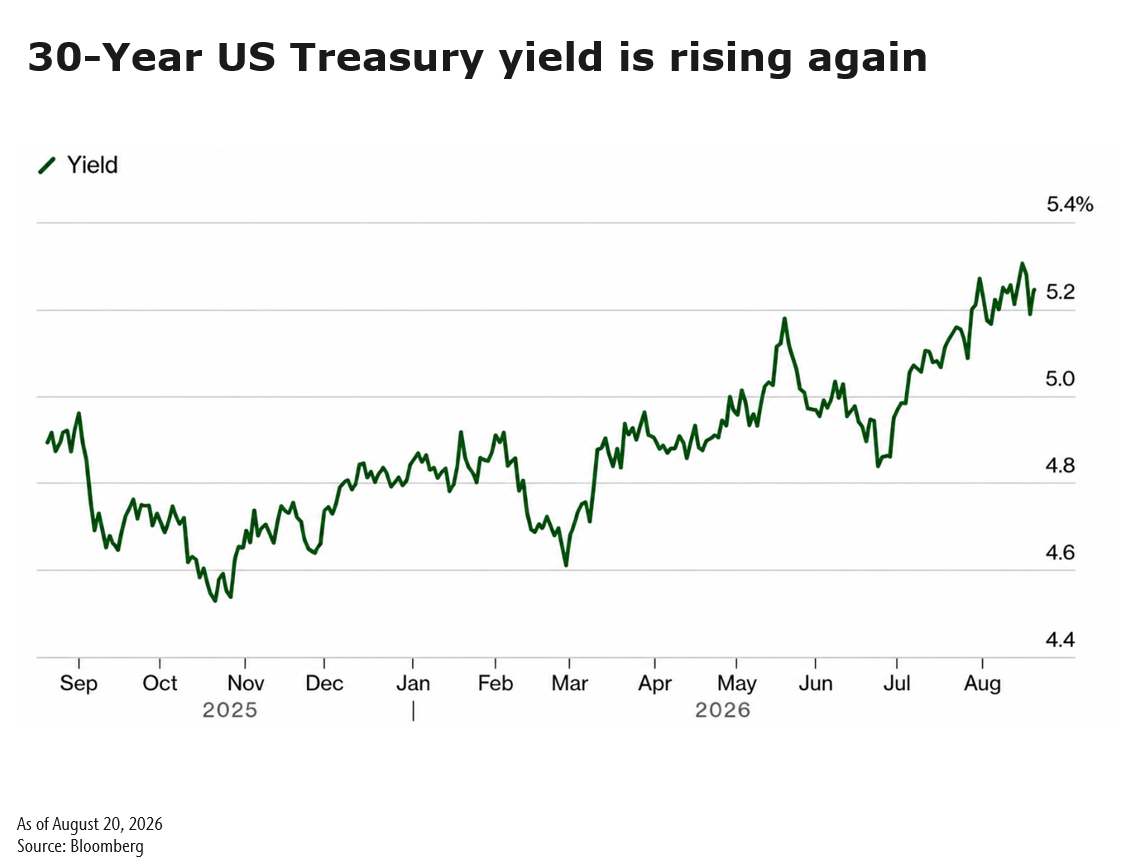
Higher yields are a headwind for equities because investors can earn more from bonds, companies face higher financing costs, and future earnings are worth less when discounted at higher rates. We do not believe this derails the equity outlook: economic growth remains resilient and corporate earnings are strong. However, if yields stay elevated, earnings will need to do more of the work as valuations face greater pressure.
AI has more to prove
Higher yields are particularly important for artificial intelligence (AI) because valuations remain demanding and the investment cycle is extraordinarily capital intensive. Higher financing costs and discount rates increase the return companies need to earn on the billions being invested in data centres, chips and infrastructure.
At the same time, questions about AI return on investment are increasing. The cost of inference is falling quickly as models improve and competition increases. That should stimulate demand, but much remains uncertain. If cheaper AI leads to substantially greater usage, higher volumes can support the investment underway. If prices and efficiency improve faster than workloads grow, the industry risks excess capacity and weaker returns. Demand remains strong today, but higher yields are raising the hurdle just as the eventual return on AI spending is becoming less certain.
Traditional bonds remain challenged
Higher yields are also a predicament for bond investors. Traditional bond markets are down this year and extended their declines this week as yields rose. This reinforces one of our largest active portfolio positions: we remain underweight traditional fixed income and favour credit. With the likelihood of a near-term recession still relatively low and corporate fundamentals healthy, the higher income available from credit provides a better starting point for returns and more cushion against rising yields. We also favour the multi-strategy market neutral fund, which provides additional sources of return that are less dependent on the direction of markets.
The broader outlook remains constructive, but higher yields leave less room for disappointment. We remain modestly overweight equities while earnings are supportive, alongside credit and diversified strategies that can generate returns without requiring bond yields to fall.