September 18, 2026
Key takeaways
- The Fed delivered its first rate hike since 2023 after weeks of firmer inflation data and rising bond yields had prepared markets for the move.
- Markets quickly recovered from the initial decline because the hike was widely anticipated and the US economy remains on relatively solid footing.
- For portfolios, healthy economic growth and corporate earnings continue to support equities, while elevated yields reinforce our cautious stance on long-term bonds.
Last week, we highlighted that the Federal Reserve (Fed) was increasingly likely to raise rates if inflation failed to improve. That possibility had been building since Fed Chair Kevin Warsh’s Jackson Hole speech, when he signalled that he wanted to see more convincing progress toward the Fed’s inflation target. Subsequent inflation data came in slightly firmer than expected, strengthening the case for action. On Wednesday, the Fed unanimously raised its policy rate by 0.25 percentage points to 3.75%–4.00% — its first increase since 2023.
Why markets quickly moved on
Stocks initially fell and bond yields rose following the announcement, but the reaction was modest. By Thursday, equities had erased those losses, and Treasury yields had retreated.
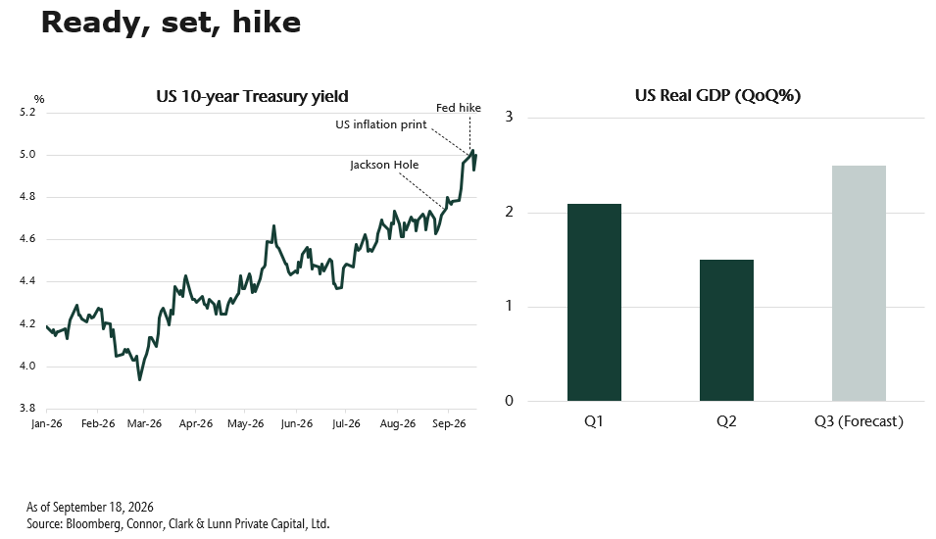
The hike was already widely anticipated. Bond markets had been adjusting well-before Wednesday’s decision, with the 10-year Treasury yield moving meaningfully higher since the Jackson Hole meeting as investors increasingly priced in tighter monetary policy.
More importantly, the Fed raised rates against an economy that remains on solid footing and has significant momentum. Business investment is very strong, consumer spending remains solid, and a healthy US labour market is supporting demand. This is leading to economic momentum with growth expected to accelerate from here. That gives the Fed greater flexibility to address above-target inflation without risking derailing the expansion.
The chart below captures both sides of that story. Bond yields had already risen significantly before the Fed acted, while economic growth has remained positive. Wednesday’s hike therefore largely validated what markets had already been pricing in, rather than delivering an unexpected tightening shock.
Falling oil prices also helped Thursday’s recovery. Lower energy prices reduce some of the immediate pressure on inflation and, in turn, the risk that the Fed will need to raise rates more aggressively in the near term. We expect more market volatility around changes in oil prices and inflation data in the coming weeks as markets assess where rates go from here.
Higher rates raise the bar, but earnings still matter
For equities, higher rates create more competition for investor capital and tend to put pressure on valuations. However, that does not automatically translate into falling stock prices. If economic growth remains healthy and companies continue to increase earnings, those profits can offset some of the pressure from higher rates.
For bonds, the challenge is different. While higher yields improve the income investors can earn over time, long-term bonds remain vulnerable if persistent inflation keeps yields rising — which we believe will be the case. This reinforces our preference to be underweight interest-rate risk in the near term.
Bottom line
The key question from here is not simply whether the Fed raises rates again. It is whether higher borrowing costs eventually become restrictive enough to weaken spending and corporate profits.
For now, growth and earnings remain supportive. If inflation gradually moves lower, the Fed may also face less pressure to extend the hiking cycle significantly.
This outlook continues to support our modest equity overweight. Within fixed income, we remain cautious on long-duration bonds and prefer areas that can generate attractive income without relying on a significant decline in interest rates. Within equities, value stocks and commodities look increasingly attractive as bond yields rise.